
Top 8 Problems Can a Car Diagnostic Test Detect?
Home » Top 8 Problems Can a Car Diagnostic Test Detect?
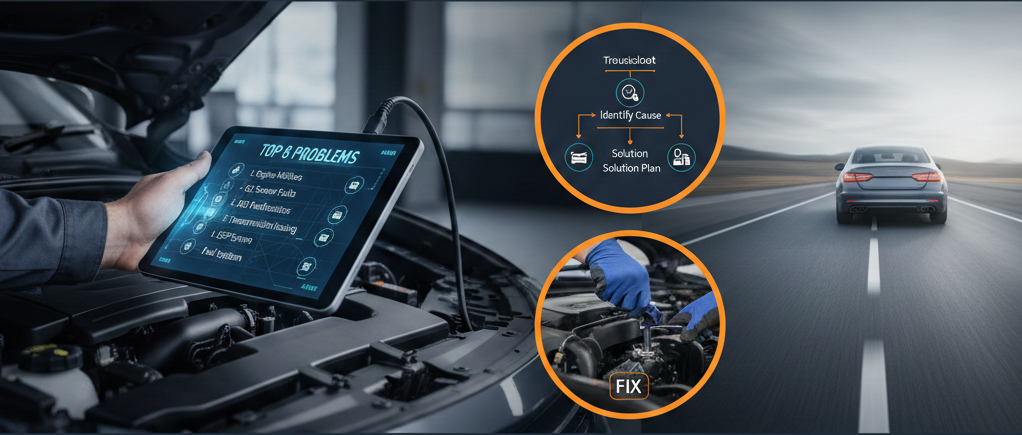
Table of Contents
A modern car is equipped with sensors, computers and electronic systems that constantly monitor how your vehicle is performing. When something is not right, your car often knows before you do. A car diagnostic test is designed to tap into this information and reveal hidden issues early, helping you avoid breakdowns, expensive repairs and safety risks.
Within the first few minutes of a professional vehicle diagnostic test, technicians can identify faults that may take hours to detect manually. For drivers across Australia, especially in busy areas like Sydney, this technology has become an essential part of regular car care.
Whether it is a targeted car diagnostic scan or a detailed check engine diagnostic test, this technology ensures accurate car fault diagnosis without guessing. For those who depend on their vehicles every day, early detection is the key to avoiding unnecessary repairs and unexpected downtime.
How a Car Diagnostic Test Works?
Every modern vehicle is fitted with an onboard diagnostic system. This monitors crucial components such as the engine, exhaust, transmission, electrical, and braking systems. When a fault is found, the system stores the error codes.
A professional car diagnostic scan connects to your vehicle’s OBD port and retrieves these codes. A trained technician interprets the codes to find out the exact issue.
What the test provides:
- Fault codes linked to specific systems
- Live data from sensors and modules
- Early warnings before a major failure occurs
This process allows accurate car fault diagnosis without unnecessary guesswork or part replacements.
Significant Problems a Diagnostic Test Can Detect
1. Engine Performance Issues
Engine problems are among the most common issues identified during a check engine diagnostic test. Even if your car still feels drivable, minor faults can reduce fuel economy and cause long-term damage.
A diagnosis can detect:
- Fuel injection problems
- Faulty oxygen or airflow sensors
- Misfiring cylinders
- Timing and ignition faults
2.Check Engine Light Problems
The check engine light is one of the most misunderstood dashboard warnings. It does not mean a serious failure, but it should never be ignored.
A test can identify:
- Emission system failures
- Loose or faulty fuel caps
- Engine control module (ECM) errors
- Sensor malfunctions
Transmission and Gearbox Faults
Transmission repairs are often expensive, which is why early detection is crucial. A vehicle diagnostic test can reveal early warning signs long before complete failure.
Common transmission issues include:
- Delayed or rough gear changes
- Transmission fluid temperature problems
- Sensor and solenoid faults
- Slipping gears
A prompt scan can save thousands by preventing irreversible gearbox damage.
Emission and Exhaust System Problems
Australia’s emission standards require vehicles to function efficiently and cleanly. A proper test plays a key role in identifying emission-related problems that may cause your car to fail a roadworthy inspection.
Detected issues may include:
- Oxygen sensor failures
- Evaporative emission system leaks
- Exhaust gas recirculation (EGR) valve issues
- Faulty catalytic converters
Electrical and Battery System Faults
Modern vehicles depend heavily on electronics. Electrical faults can cause intermittent issues that are difficult to trace without diagnostic tools.
A diagnostic test can uncover:
- Starter motor issues
- Wiring and fuse problems
- Weak or failing batteries
- Alternator and charging system faults
Fuel System and Consumption Issues
Unexpected increases in fuel consumption are often linked to hidden faults. A diagnostic test helps identify inefficiencies that affect running costs.
These include:
Fuel pump issues
Faulty fuel pressure sensors
Injector malfunctions
Incorrect air–fuel ratios
ABS, Traction Control and Safety Systems
Your vehicle’s safety systems are constantly monitored. If something is not working properly, a warning light may appear, or the system may fail silently.
A scan can detect:
Airbag and SRS system faults
Traction and stability control errors
ABS sensor faults
Brake system communication issues
The Importance of Regular Car Diagnostic Testing
This is a preventive tool that identifies small problems before they escalate.
Unique benefits include:
Improved fuel efficiency
Accurate fault detection without guesswork
Reduced repair costs
Enhanced safety and reliability
Choose Mobile Home Car Services for Professional Vehicle Diagnostic Tests
At Mobile Home Car Services, our workshop is built around giving you clear answers and reliable solutions for your vehicle, without confusion or unnecessary repairs.
When you choose us, you are not just booking a car diagnostic test; you are investing in a thorough vehicle diagnostic test that leads to precise car diagnostic scan results. Whether it is a warning light that needs a check engine diagnostic test or an underlying issue requiring expert car fault diagnosis, we make sure your vehicle is examined properly and repaired the right way.
When you bring your car to us, you are choosing a team that places importance on transparency, technical accuracy, and the long-term condition of your vehicle.
If you are looking for a workshop support backed by honest advice and professional standards, we are here to help you in every possible way. Contact us to book a test today.
FAQs
What does a car diagnostic test tell you?
A car diagnostic test shows what fault codes your vehicle’s onboard computer has detected. It can reveal issues with the engine, transmission, battery, sensors, or emissions system. Our technicians interpret these codes and explain clearly what needs attention and what can wait.
Where can I get a car diagnostic test?
You can get a car diagnostic test at a professional auto repair workshop with the right scanning equipment. We provide full system diagnostic checks using advanced tools to accurately identify the problem and recommend the right repair.
Who does car diagnostic tests?
Qualified mechanics or automotive technicians perform car diagnostic tests. Our experienced team runs a complete scan, reviews live data, and carries out further inspection if needed to ensure an accurate diagnosis.
Where can I get a free car diagnostic test?
Some auto stores may offer basic code scans, but these often only provide a fault code without detailed analysis. We offer professional diagnostic services that include expert interpretation and practical repair advice, helping you avoid unnecessary parts replacement.
How long does a car diagnostic test take?
A standard diagnostic test usually takes 30 to 60 minutes. If further testing is required, we’ll let you know upfront. You can book a diagnostic appointment with our team to get fast, reliable answers about your vehicle.
