
Prevent Battery Drain in Winter | Car Battery Care Tips & Maintenance
Home » Prevent Battery Drain in Winter | Car Battery Care Tips & Maintenance
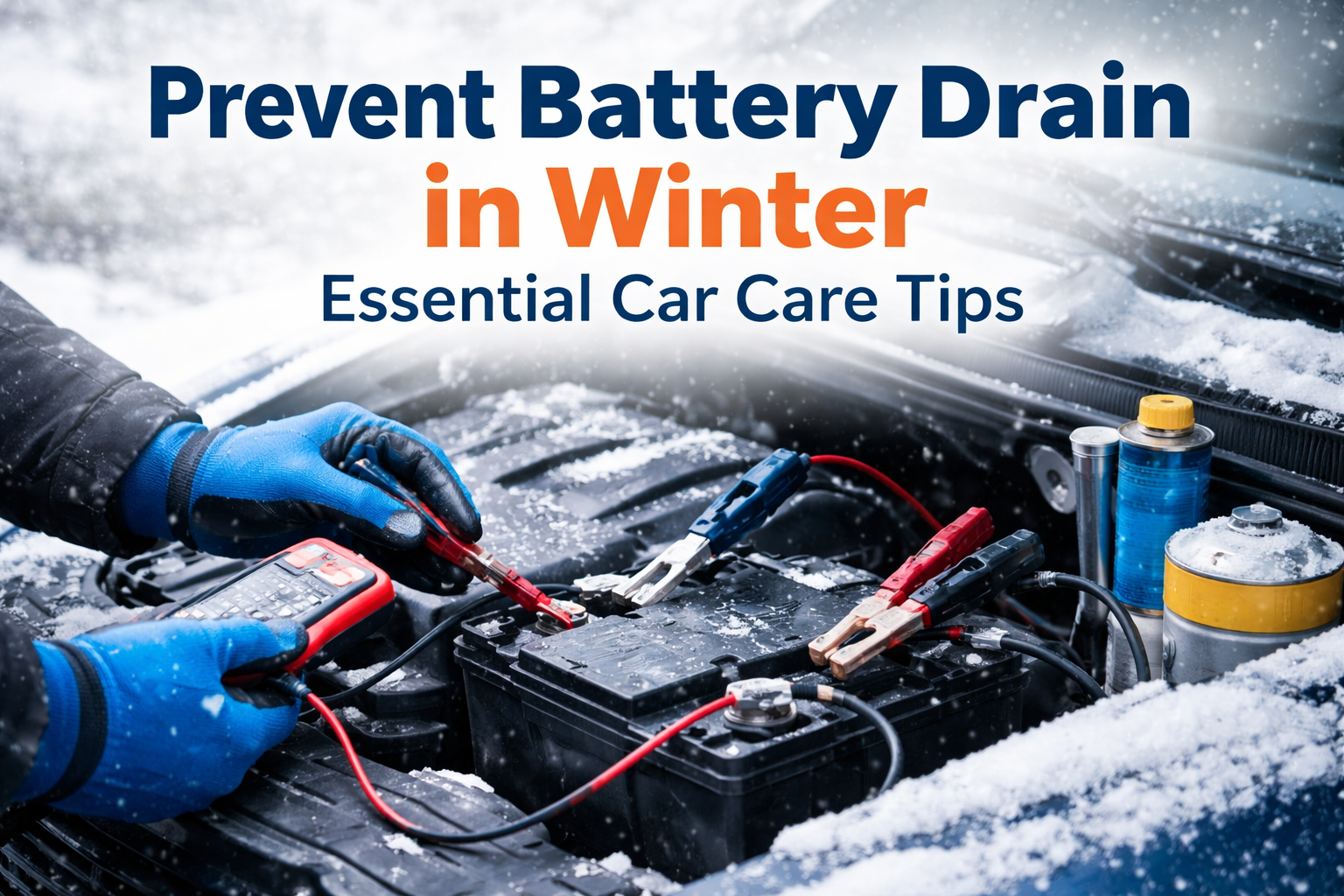
Table of Contents
Prevent Battery Drain in Winter with These Essential Car Care Tips
Winter has its own demands on a vehicle. Lower temperatures, increased electrical loads, and shorter trips can all contribute to battery problems. Many drivers discover a weak battery on a freezing-cold morning when their vehicle struggles to start.
Understanding cold-weather battery maintenance helps prevent those frustrating situations and keeps your vehicle reliable throughout the colder months.
Following good winter car battery care practices not only extends battery life but also helps avoid breakdowns and expensive emergency repairs. This blog explains how to maintain a healthy battery, what warning signs to watch for, and the best strategies to prevent battery drain during winter.
Why Is Winter Hard on Car Batteries?
Cold weather affects both the battery’s performance and the vehicle’s electrical demands.
Increased Engine Resistance
Cold oil thickens, requiring the engine to crank more power. This increased load places extra strain on the battery during start-up.
Higher Electrical Demand
Winter often means more use of electrical accessories, such as:
- Headlights during darker mornings and evenings
- Demisters and heaters
- Heated seats or steering wheels
- Windshield wipers during rainy conditions
Reduced Chemical Reaction
Battery power depends on chemical reactions occurring inside the cells. Cold temperatures slow these reactions, reducing the amount of electrical energy produced.
Winter Car Battery Care Essentials
Regular Battery Testing
Testing the battery before winter begins ensures it can handle colder conditions. Most automotive technicians suggest testing at least once per year, especially before winter. A battery test checks the voltage output, cold-cranking amps, and overall battery condition.
Keep the Battery Fully Charged
A fully charged battery is less likely to freeze and performs better in cold conditions.
Ways to maintain a full charge include:
- Driving the vehicle regularly
- Taking longer trips when possible
- Avoiding excessive short drives
Park in a Safe Area
Whenever possible, park in a garage or a covered space to reduce exposure to the cold. Even a slight increase in temperature improves the battery’s efficiency.
Battery Terminal Corrosion Prevention
One of the most common issues affecting battery performance is corrosion on the terminals. Corrosion creates resistance that impedes electrical flow, making it harder for the battery to deliver power.
What Causes Terminal Corrosion?
Battery corrosion typically forms due to:
- Chemical reactions from battery acid
- Hydrogen gas released during charging
- Moisture and environmental exposure
Steps for Battery Terminal Corrosion Prevention
- Turn off the engine and disconnect the battery
- Inspect the terminals and cables
- Clean corrosion using a baking soda and water solution
- Use a wire brush to remove leftover residue
- Dry the terminals thoroughly
- Apply a protective grease or anti-corrosion spray
Prevent Battery Drain in Winter Conditions
Battery drain becomes more common during winter due to increased electrical loads and reduced charging efficiency.
Turn Off Unnecessary Electrical Systems
Before leaving the vehicle, ensure interior lights, heated seats, radio or infotainment systems, and headlights are switched off.
Disconnect Accessories
Some accessories, like dash cameras, phone chargers, and GPS units, continue drawing power even when the vehicle is off. Removing these devices helps prevent battery drain.
Simple Winter Battery Maintenance Checklist
Monthly Battery Check
Inspect the battery for loose cables, corrosion, cracks, or leaks.
Clean Terminals
Regular cleaning helps with battery terminal corrosion prevention.
Test Battery Voltage
A battery that is in good condition should measure around 12.6 volts when fully charged.
Inspect Charging System
Scheduling a vehicle charging system inspection ensures the alternator and voltage regulator are functioning correctly.
Check Battery Age
Most car batteries last between 3 and 5 years, or up to 6 years. Older batteries are more likely to fail during winter.
Prevent Battery Drain During Winter with Mobile Home Car Services
At Mobile Home Car Services, our dedicated workshop team provides professional automotive servicing, diagnostics, and repairs designed to keep your vehicle functioning smoothly throughout the year.
Whether your car needs a battery health check, electrical testing, or a full mechanical inspection, our experienced technicians deliver precise work backed by practical expertise.
A thorough inspection at the workshop also supports essential cold-weather battery maintenance, ensuring your battery remains strong enough to start your engine during cold mornings.
Another important part of the service involves battery terminal corrosion prevention. Clean terminals and secure connections ensure electricity flows properly between the battery and the rest of the vehicle.
If your vehicle needs professional attention to prevent battery drain during winter, contact us to book a service today.
